Share this:


The world is more interconnected than ever. What happens in one part of the globe, especially in economic terms, often sends ripples across other countries, including India. One such event that can shake things up for the 5th largest economy and its investors is a global recession. In this 12-minute read, we will break down the impact in simple terms, one concept at a time.
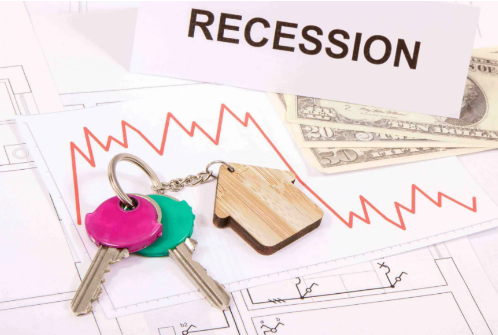
A recession occurs when a country’s economy contracts over a sustained period, typically marked by declines in consumer spending, business investment, and employment. Think of it as an economic slowdown where businesses make less money, jobs are harder to find, and people tighten their wallets. A recession can last months or even years and have wide-ranging effects on economies worldwide.
Right now, many economists are predicting a potential recession in the U.S. due to ongoing inflationary pressures, rising interest rates, and geopolitical uncertainties. Similarly, China’s economy is also struggling, with slowdowns in manufacturing and a real estate crisis affecting global markets. These are major economic players, and when their economies face challenges, the consequences are felt globally.
To truly understand how a global recession impacts India, it’s helpful to look back at history. India has weathered several global downturns, and each time, the economy responded differently based on domestic resilience, government policies, and global circumstances.
1. The 2008 Global Financial Crisis
The 2008 financial crisis, triggered by the collapse of Lehman Brothers in the U.S., sent shockwaves across the global economy. While the crisis was centered in the West, India wasn’t immune. The country’s GDP growth rate, which had been hovering around 9%, plummeted to 6.7% in 2008-09, according to the Reserve Bank of India (RBI) . Key sectors like real estate, banking, and IT were heavily affected, especially since Indian IT companies were servicing clients from recession-hit markets in the U.S. and Europe.
Impact: India’s exports dropped by 16% in 2009, as per the Directorate General of Foreign Trade (DGFT), reflecting the fall in demand for Indian goods in the U.S. and Europe. This led to slower growth in manufacturing, job losses, and a significant drop in foreign direct investment (FDI). Additionally, the Bombay Stock Exchange (BSE) Sensex lost over 50% of its value from January to October 2008, reflecting panic selling and capital flight.
Effect on Investors: Indian investors who were exposed to global markets saw their portfolios shrink significantly. However, those who stayed invested during the downturn were rewarded when the market rebounded, with the Sensex recovering its losses by 2010.
2. The 1997 Asian Financial Crisis
The Asian Financial Crisis began in Thailand and quickly spread across East and Southeast Asia. Although India was not directly involved in the crisis, the ripple effects were felt in its financial markets. Many Asian currencies, like the Thai Baht and the Indonesian Rupiah, collapsed, and investor sentiment in emerging markets, including India, turned negative.
Impact: During this period, foreign institutional investors (FIIs) pulled money out of India, leading to volatility in the stock market, according to reports from SEBI. The Indian rupee depreciated significantly during the crisis, although not as sharply as other Asian currencies. However, India’s conservative banking policies and capital controls shielded the economy from a more severe impact.
Effect on Investors: The stock market saw dips, but India’s relatively strong domestic economy helped cushion the blow. Investors who diversified their portfolios and invested in sectors focused on domestic consumption fared better than those heavily reliant on exports or foreign markets.
3. COVID-19 Pandemic Recession (2020)
The most recent example is the recession caused by the COVID-19 pandemic, which led to a sharp contraction in economies globally, including India. The Indian economy shrank by 7.3% in the 2020-21 fiscal year, marking its worst recession since independence, according to the National Statistical Office (NSO). Sectors like travel, tourism, and hospitality were severely hit, while IT and healthcare emerged relatively resilient.
Impact: During this period, the Indian government announced a fiscal stimulus package of approximately ₹20 lakh crore under the Atmanirbhar Bharat initiative to boost the economy. Additionally, the Reserve Bank of India (RBI) cut interest rates to record lows, infusing liquidity into the financial system.
Effect on Investors: The stock market initially plummeted in March 2020 but bounced back strongly due to liquidity injections and government stimulus. Investors who held onto their investments saw significant gains in the following year, with the Sensex gaining over 80% by the end of 2020.
From the 2008 financial crisis to the COVID-19 pandemic, it’s clear that global recessions ripple through various sectors of India’s economy, with some industries more vulnerable than others. As we look ahead to 2024, with looming recessionary fears in the U.S. and China’s ongoing economic challenges, certain sectors in India and critical structures may once again face headwinds.
India’s economy is export-driven in many sectors, from textiles and pharmaceuticals to IT services. When major economies like the U.S. or China face a recession, their demand for Indian goods and services declines, as consumers and businesses in those countries cut back on spending.
For example, if you’re working in a tech company in Bengaluru that heavily relies on contracts from U.S. companies, the projected U.S. recession might lead to fewer projects and tighter budgets from your American clients. This could result in a slowdown in your company’s revenue, potential layoffs, or even reduced salary hikes.
Effect on Investors: For Indian investors, this means that sectors heavily dependent on exports, such as IT or manufacturing, might see reduced profits. Stock prices for these companies could decline, which in turn impacts your investments. If you hold stocks in companies like Infosys or TCS, for instance, the reduced outsourcing demand from recession-hit economies can slow down their growth, impacting stock prices and dividends.
When countries like the U.S. or China go into a recession, foreign investors become cautious and reduce their exposure to emerging markets like India. The slowdown in China’s economy is a case in point. China’s growth engine has sputtered due to debt-ridden property developers and a faltering consumer market, pushing global investors to think twice before expanding in emerging markets. If global recessionary fears rise, India could see a dip in FDI as well.
Effect on Investors: If you have investments in sectors that are heavily dependent on foreign capital, like real estate or infrastructure, this might lead to project delays or underperformance. As foreign investment slows down, growth in these sectors may stagnate, and stock prices of companies operating in these areas could drop, making it a tough time for investors who were expecting significant returns.
When countries like the U.S. experience economic slowdowns, their central banks—like the U.S. Federal Reserve—often cut interest rates to stimulate economic activity. A rate cut essentially means that borrowing money becomes cheaper, encouraging businesses and individuals to take loans, spend more, and invest to reignite economic growth.
As of September 19, the U.S. Federal Reserve made a significant move by cutting rates by half a percentage point, bringing them to the 4.75%-5% range. This is the first-rate cut aimed at tackling inflation since 2020. While this strategy is meant to boost domestic activity in the U.S., its effects often extend beyond borders, indirectly impacting economies like India’s."
Effect on Investors: Rate cuts in developed economies can make emerging markets like India less attractive to global investors. When the U.S. offers lower interest rates, investors may pull their money out of riskier emerging markets like India and shift it to safer assets back home. This outflow of capital can lead to market volatility in India and depreciation of the Indian rupee. Indian investors might see their portfolio values drop in the short term due to these global movements.
Many Indian families depend on remittances sent by relatives working abroad, particularly in the U.S., Europe, and the Middle East. Recessions in these regions, especially the projected one in the U.S., can lead to job losses or pay cuts for Indian expatriates. This results in reduced remittances back home.
Effect on Investors: For families who use remittances for savings and investments, a reduction in inflows could limit their ability to invest in mutual funds, stocks, or real estate. For instance, if you were using remittance money to fund a real estate investment, you might have to put your plans on hold.
During a global recession, demand for oil tends to fall, as industries slow down and consumers cut back on travel. This often leads to a drop in global oil prices, which is generally beneficial for India, as it imports a significant portion of its oil. Lower oil prices reduce transportation and manufacturing costs, which can ease inflationary pressures in the country.
Let’s consider how China’s economic slowdown and reduced industrial activity have contributed to lower global oil prices. For India, which imports nearly 80% of its oil, this has meant lower fuel costs and less strain on the trade deficit.
Effect on Investors: Cheaper oil can lead to lower inflation, which benefits both consumers and businesses. This could be a positive signal for sectors like transportation, FMCG (Fast-Moving Consumer Goods), and manufacturing, as their input costs drop. For investors, this means that companies in these sectors might report better profit margins, which could translate to better stock performance.
Whenever a global recession looms, foreign investors often look for safety in stable currencies like the U.S. dollar. This can lead to capital outflows from emerging markets like India, causing the rupee to weaken. The recent concerns over a U.S. recession and China's economic troubles have already caused fluctuations in the value of the rupee.
For example, if you’re a business owner importing raw materials from Europe, a weakening rupee could mean you’ll have to spend more to buy the same materials. This raises your costs and reduces profitability.
Effect on Investors: For those investing in sectors dependent on imports, like electronics or auto parts, a weaker rupee translates into higher input costs for companies. This can squeeze profit margins and hurt stock prices. Additionally, if you’re planning to send your child abroad for education, a weaker rupee could increase the overall cost of foreign education, impacting personal finances.
During global recessions, stock markets around the world, including India, tend to be more volatile. The potential recession in the U.S., combined with China's economic slowdown, has already led to heightened uncertainty in global financial markets. Investors often panic during these times, leading to sharp sell-offs, which can pull Indian markets down as well.
During the 2008 financial crisis, stock markets crashed worldwide, but savvy investors who bought quality stocks at lower prices during the downturn saw substantial returns when markets recovered.
Effect on Investors: While volatility can be nerve-wracking, it can also present opportunities for long-term investors. If you keep your cool and identify fundamentally strong companies, you can buy them at a discount during market dips. Patience is key, as stock markets typically recover over time, offering good returns for those who wait.
From an investment perspective, a global recession can seem like a wealth-destroying event. Stock markets become volatile, currencies weaken, and businesses struggle. But for smart investors, recessions can also be opportunities for wealth multiplication.
During past recessions, those who invested in quality stocks when prices were low saw their wealth multiply when the markets rebounded. Similarly, real estate investments during economic downturns can offer significant returns once the economy picks up again. The key is having a long-term vision and the ability to weather short-term uncertainties.
Effect on Investors: If you're an Indian investor focused on wealth creation, this is a time to avoid panic-selling and focus on building a diversified portfolio. By staying invested in high-quality assets and looking for opportunities during market dips, you can potentially multiply your wealth over the long term.
While the prospect of a global recession can be daunting, savvy investors can take proactive steps to adjust their portfolios and reduce the adverse effects on their investments. One of the most effective strategies is to embrace alternative investments, including alternative real estate options, which can provide much-needed stability and growth potential during uncertain times.
Diversify Your Portfolio With Resilient Sectors
In times of economic volatility, thinking beyond traditional asset classes like stocks and bonds is crucial. Alternative investments such as fractional ownership in commercial real estate and fixed-income debt investments backed by real estate are often independent of stock market swings. Unlike equities, which can be severely impacted during recessions, alternative real estate investments tend to provide steady income streams through rental yields and capital appreciation over time, making them a safer bet in uncertain periods.
Certain sectors within real estate, such as commercial real estate or co-living spaces, tend to be more resilient during recessions. These sectors provide essential services or cater to growing demand, regardless of broader economic conditions. For instance, businesses always need office spaces, and with increasing urbanization, residential real estate in growing cities continues to perform well.
By adding alternative real estate investments to your portfolio, you’re essentially moving toward sectors that historically perform well, even when traditional markets falter. This shift not only protects your investments from severe downturns but also allows you to benefit from consistent rental yields and future appreciation when the economy stabilizes.
If you have funds to invest, alternative investments also offer a degree of liquidity not typically found in traditional real estate. Alternative investment platforms like Assetmonk allow you to invest smaller amounts while still giving you exit strategies. This means that even in volatile times, you can have access to cash or liquid assets without sacrificing long-term growth opportunities.
Now That You Know…
A global recession can shake things up for India and its investors. From falling exports to stock market volatility and currency fluctuations, the effects are widespread. However, understanding these dynamics and knowing where opportunities lie—whether through federal rate cuts, oil price drops, or smart long-term investing—can help you not just survive but thrive during a downturn.
In the end, recessions are temporary, but smart, informed investments can lead to long-term wealth multiplication.


.png)